Welcome to Our Company

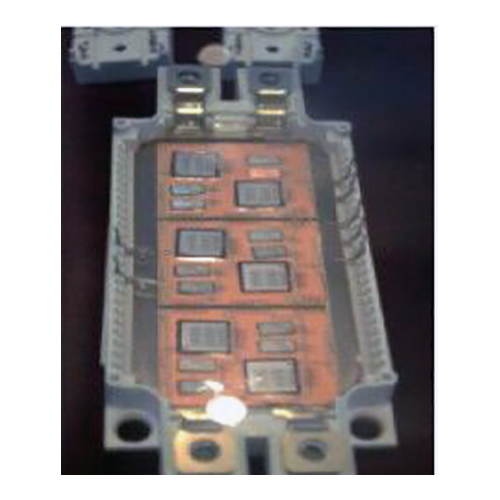
SiC Modules in R and D
Product Details:
- Output High-efficiency SiC output
- Thermal Conductivity High, with AlN ceramic substrate
- Input Variable DC input
- Components SiC MOSFETs, Diodes, Gate Driver
- Features Low switching loss, High efficiency, Robust construction
- Usage For R&D test and prototype setups
- Power Source DC Power supply
- Click to view more
X
SiC Modules in R and D Product Specifications
- Fast switching (<100ns)
- 30A
- DC
- Laboratory, Prototype Development, High Power Switching
- -40C to +150C
- Screw terminal
- DC Power supply
- Low switching loss, High efficiency, Robust construction
- For R&D test and prototype setups
- 12mm
- IP20
- Power electronics and research applications
- Up to 100kHz
- Up to 1200V
- Approx. 1.5 kg
- High-efficiency SiC output
- 115mm x 75mm x 25mm
- Black & Metal
- High, with AlN ceramic substrate
- Variable DC input
- SiC MOSFETs, Diodes, Gate Driver
- 1200V
- Standard or customizable
- 30A continuous
- SiC MOSFET/Diode Modules
- RoHS
- >10mm
- 2500V
- PCB or Chassis mount
- Half-bridge, Full-bridge options
- Prototype/Engineering Sample
- Built-in
- Copper/Gold-plated
- Configurable
- -55°C to +150°C
- Baseplate for heatsink attachment
Product Description
SiC Modules in R&D are advanced power solutions designed to accelerate innovation in high-efficiency energy systems. Utilizing Silicon Carbide technology, these modules deliver superior thermal performance, high voltage handling, and fast switching capabilities. Ideal for research in electric vehicles, renewable energy systems, aerospace, and industrial automation, SiC modules enable compact designs and reduced power losses. Their robust construction supports high-frequency operation and elevated temperatures, making them perfect for testing next-generation power electronics. In R&D environments, SiC modules help engineers explore improved energy conversion, system miniaturization, and reliability, pushing the boundaries of performance in cutting-edge applications.
SiC Modules in R&D
- Hybrid module: 650V/200A 1200V/450A
- Structure: half bridge
- Frequency: 20kHz
Material
- High electron saturation speed (2x SD ,
- High breakdown voltage ; (10x SD ,
- Wide band gap (3x Si)
- High thermal conductivity (3x SD
- High melting point (2x SD
Devices
- Low on resistance
- High efficiency
- High voltage resistant
- High temperature resistant
Application
- Enable high speed switching rate which highly improves application efficiency
- Make equipment/ system size smaller it and lighter (such as reducing air cooling fins in PFC)
- Work steadily under high voltage environment (server in power grid)
- Work steadily under high temperature environment (EV/HEV)
|
|
|
SiC diode of the company |
SiC diode of a company |
Si FRD |
Reduction rate compared with Si FRD |
|
1RM |
A |
18.1 |
16.9 |
94.8 |
80.91% |
|
Trr |
uS |
0.048 |
0.047 |
0.53 |
90.94% |
|
Qrr |
nC |
0.51 |
0.47 |
16.5 |
96.91% |
|
Erec |
mJ |
0.44 |
0.44 |
8.17 |
94.63% |
|
Eon |
mJ |
4.57 |
5.23 |
6.57 |
30.44% |
|
Eoff |
mJ |
10.23 |
10.51 |
10.27 |
0.39% |
|
Etotal |
mJ |
14.8 |
15.74 |
16.84 |
12.11% |
Versatile Bridge Configuration for Flexible Design
Choose between half-bridge and full-bridge module options to fit your laboratory power electronics setups. Both types facilitate high-efficiency switching with an output capacity of 30A continuous, making them ideal for prototype development and advanced switching circuits in R&D.
Advanced Thermal Management
These modules include a ceramic AlN substrate for superior thermal conductivity and a baseplate for effective heatsink mounting. This ensures stable operation in temperature ranges from -40C to +150C, essential for rigorous laboratory testing and high-power switching applications.
Built-in Safety and Compliance Features
Integrated ESD protection, an IP20 rating, and creepage distances over 10mm provide safety and reliability. RoHS compliance and robust metal housing further make these modules suitable for both local and global R&D research environments.
FAQ's of SiC Modules in R and D:
Q: How do I configure the gate resistance on these SiC modules?
A: The SiC modules feature a configurable gate resistance, allowing you to optimize switching performance for different SiC MOSFET and application requirements. You can select your preferred resistance value during the design phase or consult module documentation for supported ranges.Q: What are the recommended mounting methods for these modules?
A: These SiC modules can be either PCB-mounted or attached to a chassis using the baseplate, which also supports heatsink integration for effective cooling during high-power laboratory testing or prototype setups.Q: When should I use the half-bridge versus the full-bridge module type?
A: Half-bridge modules are ideal for single-phase, basic DC-DC converter or inverter topologies, while full-bridge modules are better suited for bi-directional or higher efficiency full-bridge converter designs, common in R&D and advanced switching applications.Q: Where can these SiC modules be deployed?
A: These modules are intended for research laboratories, power electronics R&D environments, prototype development facilities, and academic setups where high-power switching and system evaluation are required.Q: What is the process for integrating the modules into a test setup?
A: To integrate, connect the variable DC input and output terminals, ensure the baseplate is attached to a compatible heatsink for thermal management, and interface with your control circuitry via the screw terminals. Select configurable parameters such as gate resistance as needed.Q: How does the built-in ESD protection benefit usage?
A: Built-in ESD protection protects sensitive SiC components from electrostatic discharge, reducing the risk of premature failure and ensuring greater reliability during handling and operation in research environments.Q: What are the main benefits of using these SiC modules in R&D applications?
A: These modules offer fast switching (<100ns), high efficiency, low switching losses, and robust construction. Their flexibility and compliance features make them an excellent choice for iterative R&D testing, rapid prototyping, and high-power switching applications.Tell us about your requirement

Price:
Quantity
Select Unit
- 50
- 100
- 200
- 250
- 500
- 1000+
Additional detail
Mobile number
Email

Other Products in 'SiC Device' category

Contact Details

- Rome 2401, Block B, Times Apartment, Anshanxi Street, Nankai Dist., Tianjin - 300192, China
- Phone : 86-22-27474502
TIANJIN CENTURY ELECTRONICS CO., LTD.

- Mr. Direct Li (Sales Manager)
- Mobile : +8615222645958
- Send Inquiry
 Send Inquiry
 Send Inquiry
 Call Me Free
TIANJIN CENTURY ELECTRONICS CO., LTD.
All Rights Reserved.(Terms of Use)
Developed and Managed by Infocom Network Private Limited.
Developed and Managed by Infocom Network Private Limited.
 English
 Spanish
 French
 German
 Italian
 Chinese (Simplified)
 Japanese
 Korean
 Arabic
 Portuguese